
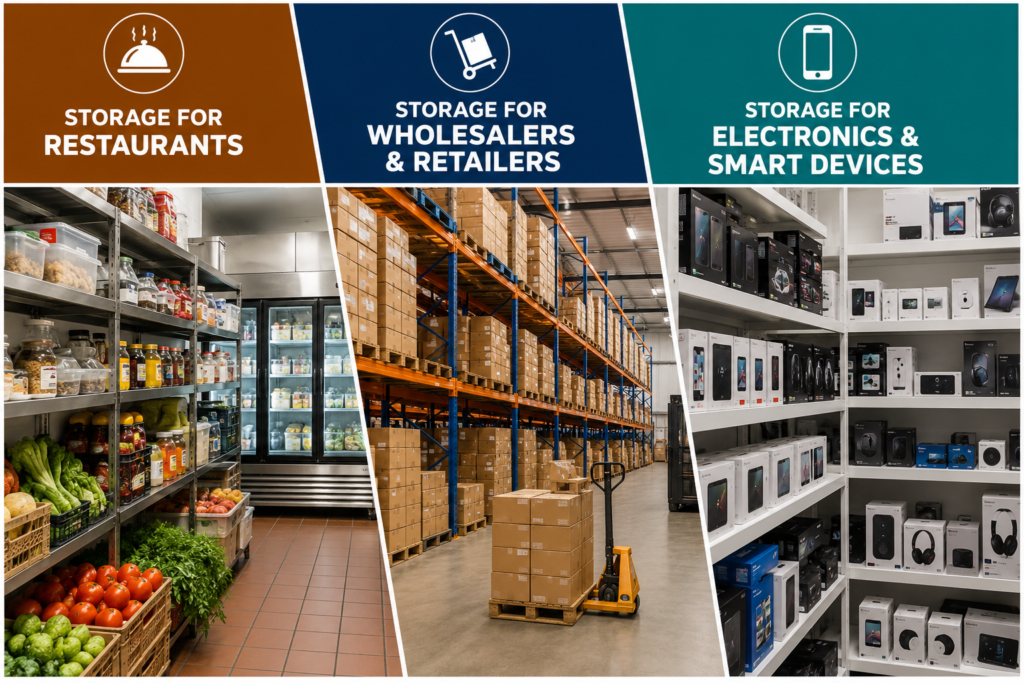
Efficient storage is no longer just a back-office concern — it directly affects how smoothly a business runs day to day. Whether goods need to stay fresh, organized, or simply out of the way until needed, the right storage setup can reduce waste, save time, and improve overall operations. Different industries, however, have very different storage needs.
Storage for Restaurants
Restaurants deal with a constant flow of perishable ingredients, packaged goods, and equipment that all need proper organization. Storage for restaurants typically requires:
- Temperature-controlled space for perishables
- Easy-access shelving for high-turnover ingredients
- Secure storage for bulk dry goods
- Flexible space for seasonal menu items or equipment
Poor storage in a restaurant setting often leads to spoilage, inefficient kitchen workflows, and unnecessary waste — all of which directly affect a restaurant’s bottom line.
Storage for Wholesalers and Retailers
Wholesalers and retailers operate on volume, which means storage for wholesalers and retailers needs to prioritize space efficiency and inventory accessibility. Key requirements include:
- Scalable storage that can expand with seasonal stock fluctuations
- Organized layouts that support fast picking and dispatch
- Secure facilities to protect high-value inventory
- Easy loading and unloading access for frequent deliveries
For businesses managing large product catalogs, the difference between a well-organized storage facility and a disorganized one can directly impact order fulfillment speed and customer satisfaction.
Storage for Electronics & Smart Devices
Electronics and smart devices require a different kind of care altogether. Storage for electronics & smart devices must account for:
- Protection from humidity and dust, which can damage sensitive components
- Secure, monitored facilities given the high resale value of electronics
- Organized inventory systems to track fast-moving SKUs and serial numbers
- Climate stability to prevent heat damage during storage
Because electronics often carry higher per-unit value and are more sensitive to environmental conditions than other goods, businesses in this category typically need storage partners with stricter security and climate control standards.
Units: A Storage Provider Worth Considering
Units offers flexible storage solutions designed to accommodate the varying needs of restaurants, wholesalers, retailers, and electronics businesses alike. Their facilities are built to support different industry requirements, from perishable-friendly setups to secure, climate-stable units for higher-value goods. Businesses comparing storage providers may find it worthwhile to include Units on their shortlist. More information is available at units.sa.
Choosing the Right Storage Partner
Before committing to a storage provider, businesses should evaluate:
- Climate control capabilities relevant to their product type
- Security measures, including monitoring and access control
- Flexibility to scale storage space up or down as needed
- Accessibility for regular loading, unloading, and inventory checks
Conclusion
Storage needs vary significantly depending on the industry, whether it’s keeping restaurant ingredients fresh, managing high-volume wholesale inventory, or protecting sensitive electronics. Choosing a provider like Units that understands these distinct requirements can help businesses avoid common storage pitfalls and keep operations running smoothly.
FAQs
1. What type of storage is best for perishable restaurant goods? Temperature-controlled storage with easy-access shelving is ideal, as it keeps perishables fresh while supporting fast kitchen workflows.
2. How does storage for wholesalers differ from retail storage? Wholesale storage typically prioritizes bulk capacity and fast dispatch logistics, while retail storage often focuses more on organized, accessible inventory for quicker turnover.
3. Why does electronics storage require special conditions? Electronics are sensitive to humidity, dust, and heat, all of which can degrade components or void warranties if not properly controlled.
4. Can storage units scale with business growth? Yes, flexible storage providers typically offer scalable space options to accommodate seasonal demand or long-term business growth.
5. What security features should businesses look for in a storage facility? Look for monitored access, surveillance systems, and controlled entry to protect high-value or sensitive inventory.