
Dry Storage in Saudi Arabia: A 2026 Guide for Growing Businesses
Dry storage has quietly become one of the smartest moves a Saudi business can make in 2026. As rents climb across Riyadh, Jeddah, and Dammam, companies are looking for climate-stable space that protects inventory without the cost of a full warehouse lease. Dry storage answers that need directly, giving you clean, low-humidity space for goods that must stay safe and sellable.
In this guide, we explain what dry storage is, who benefits most from it, and how to choose the right unit for your stock. Whether you run an online shop, a distribution business, or a retail chain, the principles below will help you cut waste, protect margins, and scale with confidence.
What Dry Storage Means and Why It Matters
Dry storage refers to space kept at a stable ambient temperature with controlled humidity, designed for products that do not need refrigeration but still spoil or degrade in damp, hot conditions. Think packaged food, textiles, electronics, documents, and dry consumer goods.
Saudi Arabia’s climate makes this especially important. Coastal cities carry high humidity, while inland heat can warp, crack, or fade unprotected stock. A dedicated Dry Storage facility removes those risks by keeping air movement, temperature, and moisture within a safe band year round.
Common Goods That Belong in Dry Storage
- Packaged and canned food products
- Paper goods, books, and business documents
- Clothing, fabric rolls, and packaged apparel
- Consumer electronics and small appliances
- Cosmetics, cleaning supplies, and dry chemicals
- Furniture and household seasonal items
Dry Storage vs. Other Storage Types
Choosing the wrong storage class wastes money and risks your stock. The table below compares the main options so you can match your inventory to the right environment.
| Storage Type | Typical Temperature | Best For | Relative Cost |
|---|---|---|---|
| Dry Storage | Ambient, humidity controlled | Packaged goods, textiles, documents | Low to medium |
| Chilled Storage | 2 to 8 degrees Celsius | Fresh food, pharmaceuticals | Medium to high |
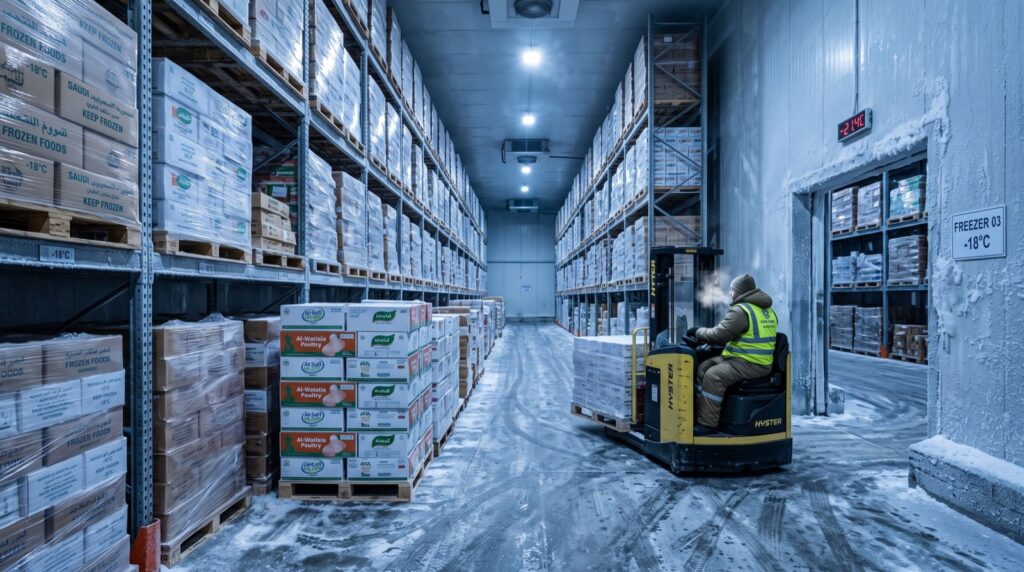
| Frozen Storage | Minus 18 degrees or below | Meat, seafood, frozen meals | High |
| Open Warehouse | Uncontrolled | Durable, weather-tolerant bulk items | Low |
How Dry Storage Helps Wholesalers and Retailers
Retail and distribution businesses live and die by inventory flow. Hold too much stock in the wrong place and you tie up cash. Hold too little and you lose sales. Purpose-built Storage for Wholesalers and Retailers gives you the flexibility to buy in volume, protect goods, and release them to shelves or customers exactly when demand appears.
This model has gained ground during Saudi Arabia’s Vision 2030 push toward a stronger logistics and non-oil economy. According to the World Bank Logistics Performance Index, efficient storage and distribution are core drivers of competitiveness, and local firms are investing heavily to keep pace.
Practical Benefits You Can Measure
- Lower spoilage: Stable conditions reduce write-offs from damaged or degraded stock.
- Better cash flow: Buy seasonal or bulk stock early at better prices, store it safely, and sell over time.
- Faster fulfillment: Centralized, organized space speeds up picking and dispatch.
- Scalable cost: Rent only the space you need and grow without a long warehouse commitment.
How to Choose the Right Dry Storage Provider
Not every facility is equal. A good provider protects your goods, gives you access when you need it, and keeps records clean. Work with quality service providers who can prove their standards rather than just promise them.
Before you sign, check these points:
- Humidity and temperature monitoring with documented logs
- Pest control and regular hygiene inspections
- Security including cameras, controlled access, and insurance options
- Flexible unit sizes and clear month-to-month terms
- Fast access hours that match your operating schedule
A Quick Tip From Experience
One habit separates smooth operations from chaotic ones: label everything by batch and expiry, even for dry goods. Businesses that adopt simple first-in, first-out shelving inside their dry storage units routinely cut waste and speed up audits. It costs almost nothing and pays back fast.
Planning Your Dry Storage Space for 2026
Space planning starts with honest forecasting. Estimate your peak inventory, add a buffer of 15 to 20 percent for growth or seasonal spikes, and choose a unit that leaves room for aisles and safe stacking. Overcrowding blocks airflow and defeats the purpose of controlled dry storage.
Map your stock into fast movers and slow movers. Keep fast movers near the entrance for quick access and place slow movers deeper inside. This small layout choice reduces handling time every single day.
Dry Storage and the Saudi E-Commerce Boom
Online retail in Saudi Arabia keeps growing at a rapid pace, and that growth changes how businesses think about space. Selling online means holding stock somewhere reliable, close to your customers, and ready to ship at short notice. A cluttered back room or a garage simply cannot keep up once orders scale.
Dry storage bridges that gap. It gives digital sellers a professional home for inventory without forcing them into a long, expensive warehouse lease. As order volumes rise and fall with promotions and seasons, flexible dry storage lets you expand or contract your footprint to match demand.
Turning Storage Into a Fulfillment Advantage
Speed and accuracy define the online shopping experience. Customers expect quick dispatch and correct orders every time. When your inventory sits in clean, organized dry storage with clear labeling and logical layout, your team picks and packs faster and makes fewer mistakes.
Many growing sellers also use their storage unit as a light fulfillment hub, staging packing materials and outbound orders in one place. This keeps the whole operation tidy and repeatable, which is exactly what a scaling business needs. The result is happier customers and stronger reviews, both of which feed future sales.
Cost Control: Getting the Most From Every Riyal
Storage is a recurring cost, so efficiency matters. The goal is to pay only for the space you truly use while keeping goods protected. Start by decluttering: remove dead stock, obsolete packaging, and anything you will never sell. Every square meter you free up is money saved.
Next, store vertically. Sturdy shelving multiplies your usable capacity and keeps goods off the floor, away from dust and accidental damage. A well-stacked unit can hold far more than a floor-piled one of the same size, which delays the day you need to upgrade to a bigger plan.
- Audit inventory monthly and clear dead stock quickly.
- Use vertical shelving to maximize cubic space.
- Choose month-to-month terms so you never overpay for idle space.
- Consolidate slow movers to free up premium access areas.
Frequently Asked Questions
What is the difference between dry storage and a normal warehouse?
A normal warehouse offers space but often lacks humidity and temperature control. Dry storage adds those controls, keeping goods within a safe range so packaged food, textiles, and electronics stay in sellable condition.
Is dry storage suitable for food products?
Yes, for shelf-stable and packaged food that does not require refrigeration. Canned goods, grains, snacks, and sealed dry products are ideal. Perishable items still need chilled or frozen storage instead.
How much dry storage space does a small retailer need?
It depends on your inventory volume, but many small retailers start with a compact unit and scale up. Forecast your peak stock, add a 15 to 20 percent buffer, and choose a flexible plan you can expand.
Does dry storage in Saudi Arabia protect against high humidity?
Reputable facilities use ventilation and humidity control to counter coastal moisture and inland heat. Always confirm the provider logs temperature and humidity so you have proof of safe conditions.
Conclusion
Dry storage is a practical, low-risk way for Saudi businesses to protect stock, control costs, and grow through 2026 and beyond. Match your inventory to the right storage class, choose a provider with proven standards, and plan your space with room to scale. Do that, and your dry storage becomes a quiet engine behind steady, profitable operations. Reach out to a trusted dry storage partner today and turn wasted risk into reliable capacity.